Work Group Lunch Ideas: 30 Picks That Go Beyond Pizza
Work Group Lunch Ideas: 30 Picks That Go Beyond Pizza
· 4 min read
Work Group Lunch Ideas: 30 Picks That Go Beyond Pizza
It's Tuesday. Someone drops a message in the group chat: "What should we do for lunch?" And without fail, the answer that comes back is pizza, not because anyone particularly wants pizza, but because finding better work group lunch ideas requires collecting dietary restrictions, checking everyone's calendar, figuring out a budget, and placing an order before the window closes. For the person doing the coordinating, it's a 30-minute logistics puzzle inside a job that already has plenty of those.
Before you scroll straight to the 30 ideas below, there's one step that makes everything else easier: knowing what your team actually eats before you start evaluating menus. Pixx lets group members submit their food preferences and dietary restrictions through a single invite link, no account required, so by the time you're picking a format and calling a vendor, you already know who's gluten-free, who keeps halal, and who has a nut allergy. That information changes which options are actually viable, which saves you from building a beautiful taco bar that three people can't touch.
By the end of this article, you'll have two or three concrete lunch options matched to your group size and budget, a clear picture of which formats handle dietary variety without extra effort, and a short checklist for quantities and setup so the day of goes smoothly.
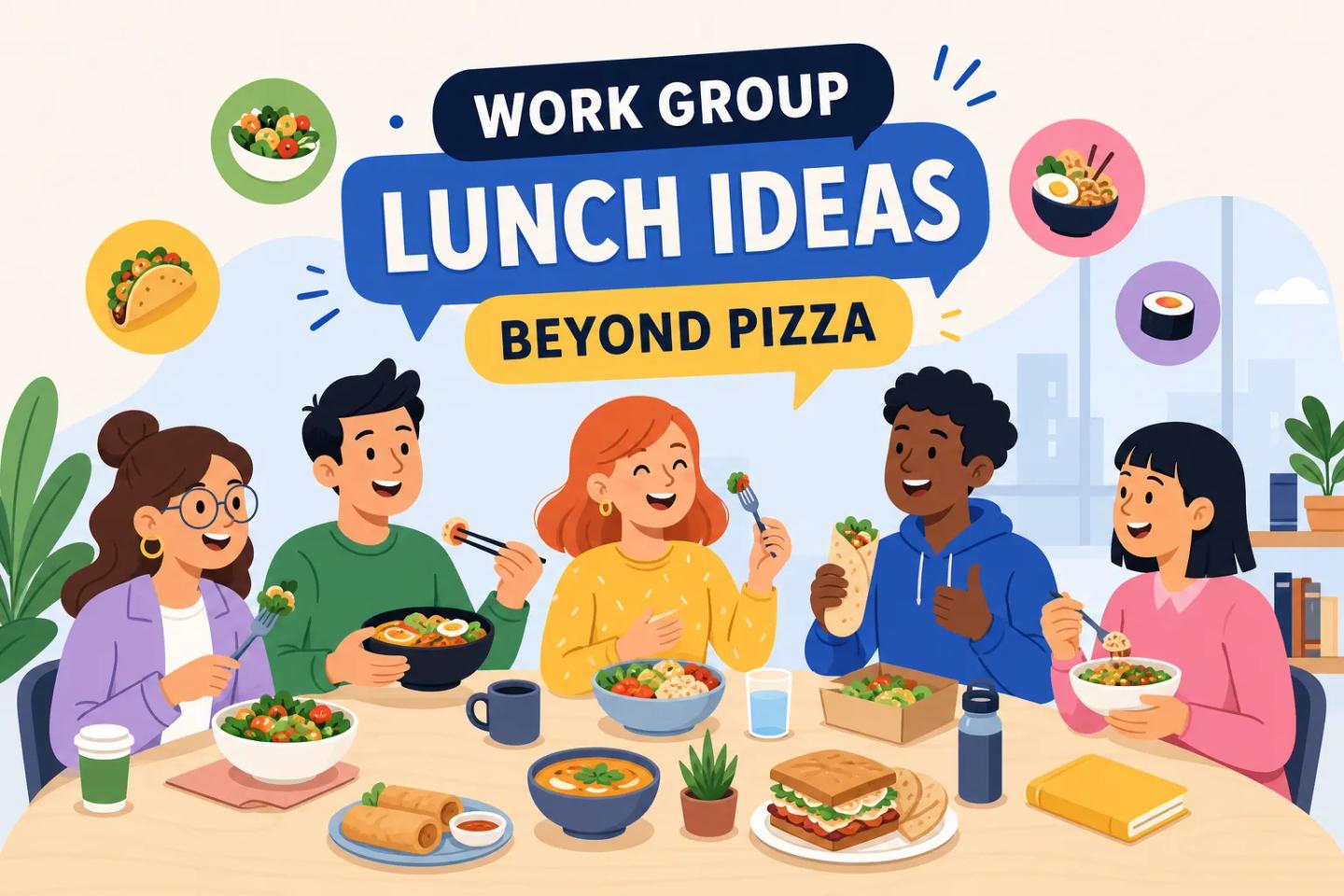
Pick a format for your work group lunch ideas first
The most common mistake office lunch organizers make is jumping straight to cuisine before answering the more important question: how should this meal be served? The format determines cost, waste, setup time, and whether people with dietary restrictions can eat comfortably or end up picking at the one thing they can identify as safe.
Groups of 10, 15: why boxed lunches almost always win
For smaller teams, individually packaged meals, solid boxed lunch ideas for work, solve three problems at once: portion control, labeling, and speed of distribution. One box per person, clearly labeled with the person's name and dietary markers, means no cross-contamination questions and no one stalling the line trying to figure out if the unmarked tray has dairy in it. Budget one full meal box per person, plus two or three extras for last-minute additions or guests.
Larger teams (25, 50): buffet or build-your-own stations
At 25 people and above, a buffet or DIY station format becomes far more practical than boxing individual meals. Build-your-own stations scale especially well because they let people self-select around their restrictions without requiring you to manage 25 different custom orders. Plan for 1.2 portions per person to account for seconds, and designate one person to monitor replenishment throughout the meal so hot items stay hot and cold items don't sit out too long.
30 work group lunch ideas organized by budget
The ideas below are sorted by per-person cost so you can match options directly to your actual budget rather than guessing. All three tiers include formats that scale and naturally accommodate dietary variety, whether you're planning weekly office lunch ideas or a one-time company event.
Budget tier ($10, $18 per person): ideas 1, 10
At this price point, you're working with portioned, self-contained formats that travel well and require minimal setup. These options work especially well for weekly team lunches or recurring events where cost adds up fast across the year. Think of these as your everyday potluck and buffet lunch ideas that don't sacrifice variety for affordability.
- Classic deli sandwich trays with chips and fruit
- Boxed wraps with a side salad
- Grain bowls: quinoa or rice base, roasted vegetables, chickpeas
- Burrito bowls: rice, beans, salsa, guacamole (vegan and gluten-free-friendly)
- Hummus and falafel platters with pita and raw vegetables
- Deli pasta salad bar with mixed protein options
- Soup and salad combo: lentil or tomato soup, gluten-free crackers
- Caprese or antipasto platters with artisan bread
- Loaded baked potato bar with toppings on the side
- DIY salad bar with chickpea, cucumber, and grain bases
Mid-range ideas ($18, $35 per person): ideas 11, 20
The mid-range tier is where you get more protein variety, better quality, and formats that feel like a real treat rather than a desk lunch. This tier suits quarterly events, lunch-and-learn food ideas, or milestone celebrations where the meal is part of the occasion, not just fuel between meetings.
- Taco and fajita bar with protein options: chicken, beef, and black beans
- Mediterranean mezze spread: stuffed peppers, dolmades, grilled halloumi
- Sushi platter or poke bowl station
- Asian noodle bowls with sesame dressing and tofu or chicken
- Build-your-own grain bowl bar with salmon or tofu as protein choices
- Catered boxed lunches from a local restaurant with premium packaging
- Hot buffet with two protein options and three sides
- Southern BBQ buffet: pulled pork, coleslaw, cornbread, vegetarian baked beans
- Artisan pizza bar made to order, with gluten-free crust and vegan cheese options
- Breakfast-for-lunch spread: quiche, frittata, seasonal fruit, pastries
Premium office catering ideas ($40+ per person): ideas 21, 30
Premium usually means staffed service, higher-quality proteins, or a multi-component experience rather than added complexity. This tier works well for leadership offsites, client-facing team events, or annual company kickoffs where the food is meant to make an impression.
- Staffed taco station with fresh guacamole made to order
- Chef-catered Mediterranean family-style feast
- Sushi and sashimi platter with a full selection of vegetarian rolls
- Plated chicken or salmon entrée with roasted vegetable sides
- Korean BBQ table experience with shared grilling
- Charcuterie and cheese spread as a starter, followed by a hot buffet
- Catered Indian buffet: biryani, dal, paneer, naan (naturally accommodates multiple diets)
- Lobster roll or premium sandwich bar with specialty sides
- Farm-to-table salad and grain bowl station with in-house dressings
- Three-course seated lunch with dietary accommodations confirmed in advance
Building a group lunch menu that works for every dietary need
Ignoring dietary restrictions isn't just inconsiderate, it's expensive. When three people can't eat half the spread, you've wasted spend and created an awkward situation the whole table notices. The good news is that certain group lunch menu ideas are structurally inclusive by design, which means you don't have to order separate special meals for anyone.
Menu formats that naturally handle dietary variety
Grain bowls, burrito bowls, taco bars, and salad stations all share one design feature: a modular structure where people build their own plate. A vegan team member, a gluten-free colleague, and someone who eats everything can all eat comfortably from the same table without requiring separate orders. When evaluating a menu format, ask whether each component can stand alone for someone with restrictions, not just whether "there's a vegetarian option somewhere."
A simple labeling system that eliminates questions
Every dish on the table needs a label card. Use consistent shorthand: V for vegetarian, VG for vegan, GF for gluten-free, with a separate allergen note for anything containing soy, nuts, dairy, or sesame. A sample label reads: Quinoa Bowl, VG, GF, quinoa, roasted vegetables, chickpeas, tahini dressing (contains sesame). Write labels based on actual ingredients, vegetarian does not mean gluten-free, and gluten-free does not mean dairy-free or vegan.
Setup checklist: quantities, supplies, and timing
Knowing what to order is only half the job. The other half is showing up with the right equipment, accurate amounts, and a setup that doesn't fall apart 20 minutes into service.
How much food to actually order
The quantity rule changes based on format. For boxed lunches, order one per person plus a few extras. For buffets and build-your-own stations, plan for 1.2 portions per person to cover seconds. For protein specifically, budget one-quarter to one-third of a pound per person. Sandwich platters serving as a standalone lunch need roughly 1.5 full sandwiches per person. These numbers prevent waste and the awkward moment when the line runs dry before everyone has been served.
What you need on the table and when to set it up
For a DIY bar or buffet, the core supplies are chafing dishes or warming trays for hot items, ice platters or ice baths for cold items, one serving utensil per dish (never shared between dishes), plates and cutlery at the start of the line, and a labeled food card at each item. A practical setup timeline: stage tables, linens, and empty serving vessels four to six hours before lunch; place nonperishables such as plates, napkins, condiments, and labels two to three hours out; move hot and cold food into serving vessels just before guests arrive. Designate one person to replenish dishes throughout service and to ensure cold items stay cold and hot items stay above safe serving temperature.
How to stop the preference chaos before it starts
Every difficult team lunch starts the same way: someone sends a message asking what people want, the thread spirals, no decision gets made, and the default answer becomes pizza. The real problem isn't the food. It's that preferences and restrictions never got collected in a structured way before the decision had to happen.
Why collecting preferences upstream saves money and reduces waste
When you know in advance that three people are gluten-free, two are vegan, and one has a shellfish allergy, you can rule out entire formats before spending time evaluating them. That's not just considerate, it eliminates wasted spend on food nobody can eat and avoids the "can I actually eat anything here?" moment that sours the whole event. It also means you can communicate specific needs to the caterer upfront rather than trying to accommodate them after the order is placed.
Turning preferences into a decision without 40 Slack messages
This is exactly the problem Pixx was built to solve. Instead of crowdsourcing food preferences through a group chat that everyone half-ignores, you create a meal event, send a single invite link, and let team members submit their dietary needs and preferences on their own time, no download required. Pixx aggregates the full group's preferences and restrictions together, rather than leaving one person to manually weigh all the variables against a restaurant's menu. For recurring office lunches, it tracks preference history over time, so coordination gets faster each round instead of starting from scratch.
Putting it all together: your work group lunch ideas in action
Work group lunch coordination doesn't have to be complicated. The framework is straightforward: choose a format that fits your headcount, set a per-person budget, pick from the menus that naturally accommodate your team's dietary mix, label everything clearly, and prep your setup in the right order. The step most organizers skip is the one that comes before all of this, actually knowing what your team eats before committing to a menu.
Collecting that information upfront, whether through a quick form or a tool like Pixx, can substantially reduce coordination time and eliminate the back-and-forth that makes group lunches feel harder than they need to be. Pick two or three work group lunch ideas from this list that fit your budget and group size, run the formats by your team, and stop letting the default answer be pizza just because it's the path of least resistance.